
Protein is one of the most important nutrients in the human diet. It provides the amino acids your body needs to build and repair muscle, produce enzymes and hormones, support immune function and maintain tissues throughout the body.
But when it comes to choosing a protein source, quantity isn’t the only consideration. Quality, digestibility, tolerability and the source of that protein all matter.
For decades, whey protein has been treated as the gold standard in sports nutrition. But the science has moved on. High-quality plant proteins can deliver comparable results, and pea protein offers a combination of nutritional quality, digestibility and versatility that makes it one of the most compelling protein sources available.
Is pea protein the better Here’s why.
What is protein and why does your body need it?
Protein is a macronutrient made up of amino acids – the building blocks your body uses to construct and repair muscle tissue, produce enzymes and hormones, support immune function and maintain tissues throughout the body.
There are 20 amino acids used by the human body. Nine are essential amino acids (EAAs), meaning your body cannot produce them in sufficient quantities and they must come from your diet.
A protein containing all nine essential amino acids is known as a complete protein.
This distinction is important. Getting enough grams of protein is one thing; getting that protein from a source with a strong essential amino acid profile is another.
Dr Yesheen’s take: “Most people think about protein in terms of quantity, how many grams they are getting per day. The question of quality, specifically whether the protein source delivers all nine essential amino acids in a bioavailable form, is just as important and far less discussed.”
Plant protein vs animal protein
Animal proteins such as whey, casein, eggs and meat are generally complete proteins and are well absorbed.
But that doesn’t automatically make animal protein better.
Plant proteins have traditionally been viewed as inferior because some individual plant sources contain lower amounts of one or more essential amino acids. Rice protein, for example, is relatively low in lysine, while many legume proteins contain less methionine.
This has led to the common assumption that plant proteins need to be combined to compete with animal proteins.
Pea protein challenges that assumption.
What makes pea protein different?
Pea protein isolate, made from yellow peas, provides all nine essential amino acids, making it a complete protein.
It also provides meaningful amounts of BCAAs, including leucine, the amino acid that plays a key role in stimulating muscle protein synthesis.
That makes pea protein fundamentally different from many of the plant proteins that have historically been considered incomplete.
And it means you don’t necessarily need to combine multiple plant protein powders just to create a nutritionally useful protein source.
Pea protein is more than just a vegan alternative
Pea protein is sometimes marketed as the “alternative” to whey, as though whey is the real protein and pea protein is simply there for people who don’t eat dairy.
That’s an outdated way of looking at it.
A good-quality pea protein provides a complete essential amino acid profile, supports muscle protein synthesis and can deliver comparable training outcomes to whey.
The question is no longer whether plant protein can work.
The question is whether you actually need whey at all.
Pea Protein vs Whey: Which Is Better?
Whey has a reputation for being highly effective because it is rapidly digested and contains high levels of essential amino acids, particularly leucine.
But faster isn’t necessarily better.
Pea protein has a slightly slower absorption profile, providing a more sustained release of amino acids. For everyday nutrition, recovery and satiety, this can be an advantage rather than a disadvantage.
More importantly, research has shown that pea protein produces comparable muscle-building outcomes to whey when consumed in adequate amounts alongside resistance training.
A randomised controlled trial comparing pea protein with whey protein during an eight-week resistance training programme found equivalent improvements in muscle thickness between the two protein sources.
Where pea protein has the advantage
The biggest advantages of pea protein aren’t necessarily found in a laboratory comparison of muscle protein synthesis. They are found in how well it fits into real people’s lives.
Pea protein is:
- Plant-based – suitable for vegan and vegetarian diets.
- Dairy-free – contains no lactose or dairy protein and doesn’t cause the bloat associated with whey.
- Complete – provides all nine essential amino acids.
- Rich in BCAAs – including leucine.
- Versatile – easily incorporated into shakes, smoothies and recipes.
- Generally well tolerated – particularly by people who experience digestive problems with dairy proteins.
- Free from the environmental and animal-production considerations associated with dairy protein.
For someone who experiences bloating or digestive discomfort from whey, switching to pea protein can make it considerably easier to consume enough protein consistently.
What about lactose and dairy intolerance?
Whey is derived from milk and can contain lactose, although the amount varies considerably between whey concentrate and whey isolate.
For people who don’t tolerate dairy well, this can make whey an uncomfortable choice.
Pea protein contains no lactose and no dairy protein, making it a useful option for people looking for a dairy-free protein source.
This is particularly relevant because lactose intolerance is extremely common globally.
Choosing a protein that your digestive system tolerates well isn’t a compromise on nutrition. It’s often the smarter choice.
Why water-extracted pea protein from Canadian yellow peas?
Not all pea protein is created equal.
Phyto Pro uses water-extracted pea protein from Canadian yellow peas, selected as the protein foundation for its products because it provides a high-quality, complete plant protein with a naturally high essential amino acid and BCAA content.
The water-extraction process provides a clean protein ingredient without relying on chemical solvents during extraction.
It also provides a neutral flavour base, allowing Phyto Pro to build products around whole-food ingredients rather than relying heavily on artificial flavours to mask an undesirable protein taste.
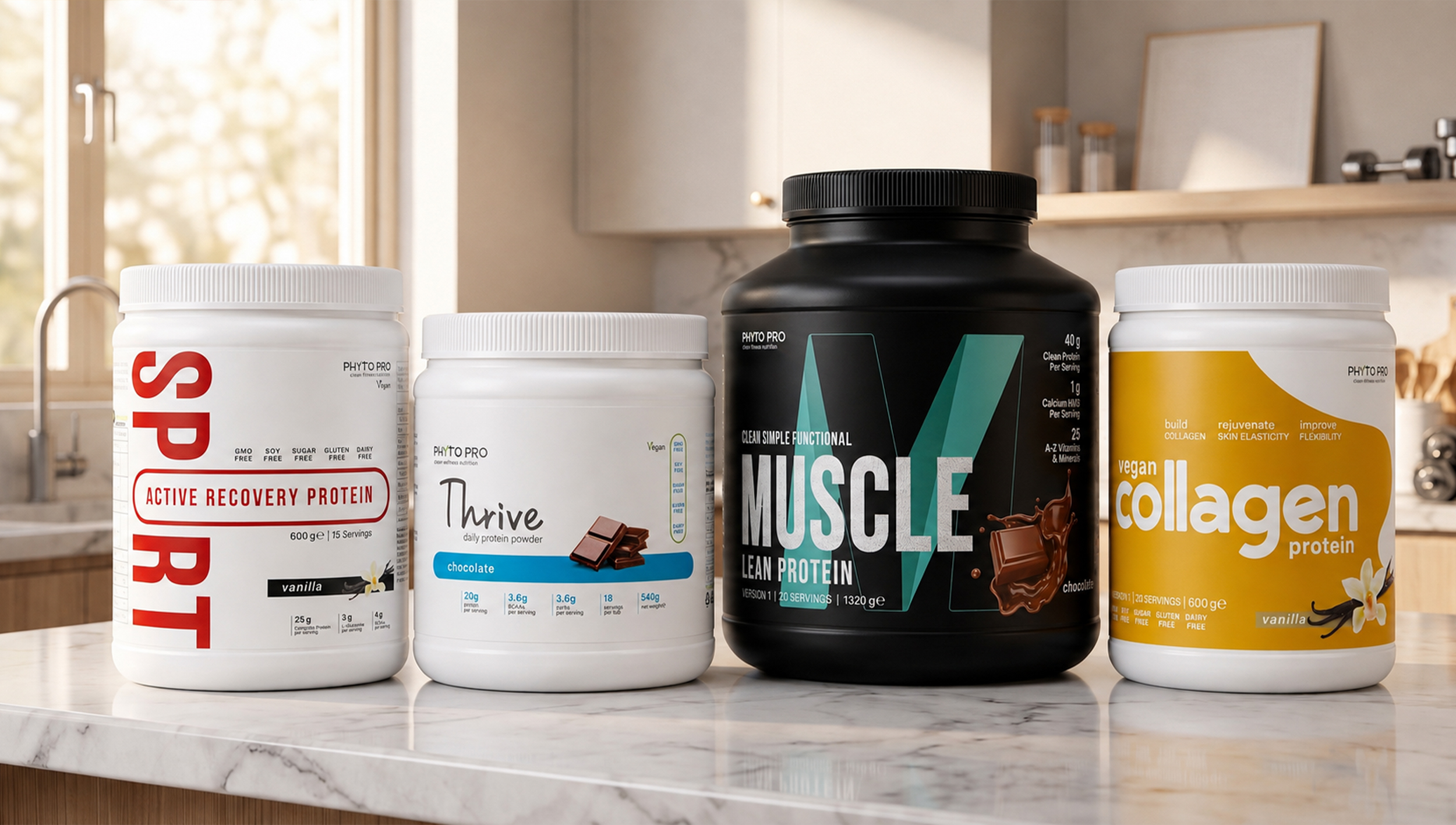
The same water-extracted pea protein from Canadian yellow peas is used throughout the Phyto Pro range, including Thrive, Muscle, Sport, Vegan Collagen and ONE, creating a consistent protein foundation.
Is pea protein as good as whey for building muscle?
Yes – pea protein is just as effective.
The key factors for building muscle are getting enough total protein, consuming sufficient essential amino acids and leucine, and combining adequate protein intake with resistance training.
Studies comparing pea and whey protein have demonstrated the same improvements in muscle thickness when combined with resistance training.
In other words, you don’t need whey to build muscle.
You need enough high-quality protein. Pea protein provides it.
How much protein do you need?
The commonly quoted Recommended Dietary Allowance (RDA) of 0.8 g of protein per kilogram of body weight per day is a minimum designed to prevent deficiency in healthy adults. It isn’t necessarily an optimal intake for people who exercise regularly.
For active adults, particularly those doing resistance training, research supports protein intakes around 1.6 g/kg/day, with higher intakes sometimes appropriate depending on training, body composition goals and energy intake.
For example:
70 kg × 1.6 g/kg = 112 g protein per day
Protein requirements can also increase with age. Older adults may benefit from higher protein intakes because the muscle-building response to protein becomes less efficient with age.
Women during and after menopause may also benefit from paying particular attention to protein intake alongside resistance training to help preserve lean muscle mass.
The practical message is simple: don’t just aim to avoid protein deficiency. Aim to consume enough protein to support what you are asking your body to do.
How can you get enough protein from a plant-based diet?
A well-planned plant-based diet can provide substantial amounts of protein.
Good sources include:
- Pea protein
- Soy and soy products for those without allergy concerns
- Lentils
- Beans
- Chickpeas
- Quinoa
- Nuts and seeds
- Whole grains
The challenge is often convenience.
Getting 100–120 g or more of protein from whole plant foods alone can require considerable planning and food volume.
A quality pea protein powder provides a convenient way to close that gap.
A shake at breakfast, after training or as part of a snack can add a meaningful amount of complete protein without requiring another full meal.
Which Phyto Pro protein is right for you?
| PRODUCT | VALUE PROPOSITION |
|---|---|
| 1. Phyto Pro Thrive Daily Protein | Thrive is designed for anyone looking for a clean, versatile way to increase daily protein intake. It provides 20 g of protein per serving from water-extracted pea protein from Canadian yellow peas and can be used in shakes, smoothies or baking. Available in Chocolate, Vanilla, Strawberry and Unflavoured. |
| 2. Phyto Pro Muscle Lean Protein | Muscle Lean Protein is designed for people focused on resistance training and body composition. It combines the same water-extracted pea protein with Calcium HMB, providing nutritional support for maintaining lean muscle during periods where body composition is a priority. |
3. Phyto Pro ONE High-Protein Meal Replacement | ONE takes the same complete pea protein foundation and combines it with a vitamin and mineral complex, chia seeds, oat flour and additional functional ingredients to create a more complete meal replacement. |
All Phyto Pro products are available in South Africa at Phyto Pro.
Frequently asked questions about pea protein
Is pea protein a complete protein?
Yes. Pea protein isolate contains all nine essential amino acids, including leucine and other BCAAs important for muscle protein synthesis.
Is pea protein as good as whey?
Yes. Research has found the same muscle-building outcomes when pea and whey protein are consumed alongside resistance training and adequate total protein intake.
Can pea protein build muscle?
Absolutely. Muscle growth depends primarily on progressive resistance training, adequate total protein and energy intake, recovery and consistency.
Pea protein provides all the essential amino acids required to support muscle protein synthesis.
Is pea protein better than whey?
In our opinion, yes.
Pea protein offers a compelling combination of complete protein, plant-based nutrition, dairy-free formulation, good tolerability and a more sustainable protein source.
Is pea protein easy to digest?
Pea protein is naturally free from lactose and dairy protein, making it a useful choice for people who experience digestive discomfort from dairy-based protein powders.
What is water-extracted pea protein?
Water-extracted pea protein is a plant-based protein isolate made from yellow peas using a water-based extraction process.
Phyto Pro uses water-extracted pea protein from Canadian yellow peas to provide a complete, high-quality plant protein with a neutral flavour profile.
What is the best plant protein powder in South Africa?
A good plant protein powder should provide meaningful protein per serving, a strong essential amino acid profile, good digestibility and ingredients that suit your dietary requirements.
Phyto Pro Thrive provides 20 g of complete pea protein per serving from water-extracted pea protein from Canadian yellow peas and is available in Chocolate, Vanilla, Strawberry and Unflavoured.
How much protein do I need per day?
The minimum recommendation for healthy adults is approximately 0.8 g/kg of body weight per day.
People who exercise regularly, particularly those doing resistance training, generally require more. An intake around 1.6 g/kg/day is a well-supported target for many active adults.
For example, a 75 kg active person aiming for 1.6 g/kg would need approximately 120 g of protein per day.
The bottom line: pea protein deserves to be the first choice
The idea that animal protein is inherently superior to plant protein is outdated.
A high-quality pea protein provides all essential amino acids, including leucine and other BCAAs, and research shows it can support comparable muscle-building outcomes to whey when consumed in adequate amounts.
But pea protein offers something beyond the numbers: it is plant-based, dairy-free, versatile and well suited to people who want a protein source that works with their health, dietary preferences and lifestyle.
You don’t need whey to build muscle.
You don’t need animal protein to get high-quality protein.
You need enough of the right protein – and pea protein is more than capable of delivering it.
That’s why Phyto Pro should be your first protein choice.