
Medically reviewed by Dr Yesheen Singh, functional medicine doctor | Last updated: 2026/09/29
Creatine monohydrate is one of the most researched supplements in the world, with more than 500 peer-reviewed publications behind it. Decades of evidence support its safety and its benefits for energy and muscle, and newer research is exploring its role in ageing and brain health.
Creatine is a compound your body makes from amino acids. About half your daily supply comes from food, mainly red meat, seafood and milk. Your liver, kidneys and pancreas make the rest, and around 95% of it is stored in your muscles. There it helps your cells quickly regenerate energy during short, intense effort. A typical diet provides only about 1 to 2 grams a day, which is why many people supplement.
Despite the evidence, creatine is surrounded by myths that put people off a supplement that genuinely works. Here’s what’s true, what isn’t, and how to take it correctly.
Is creatine just a fitness trend?
No. Creatine was first isolated from meat in 1832. In 1992, researchers showed that supplements raise creatine levels in human muscle, and by 1993 studies confirmed it improves high-intensity exercise performance. It has been studied consistently ever since.
“Creatine is one of the few supplements where the science is clear and consistent,” says Dr Yesheen Singh, functional medicine doctor and Phyto Pro co-founder. “We know how it works, we know it is safe, and study after study shows the same results. That is rare in the supplement industry.”
Who benefits most from creatine?
Creatine works best for short bursts of very intense effort. That includes weightlifting, sprinting, and stop-start sports like rugby, soccer, hockey and netball. Long endurance activities such as marathons or easy jogging don’t rely on the same energy system, so they don’t benefit in the same way. Creatine doesn’t affect aerobic endurance.
The biggest results come when you combine creatine with training. Mayo Clinic notes that creatine, especially alongside resistance training, can lead to greater gains in strength, muscle size and performance. There’s some evidence that creatine raises muscle creatine stores even without exercise, but whether that alone improves muscle performance is still unclear.
It isn’t only for athletes, either. Older adults who take creatine and do resistance exercise can improve their strength, and creatine may help slow age-related muscle loss in people who train regularly.
Does creatine make you bulky?
No. Creatine draws water into your muscle cells, which can make muscles look fuller and firmer. Some people notice a small weight gain when they start, but this is mostly water retention in the first several days, not fat. Longer training studies of 5 to 10 weeks have found no increase in total body water.
Over time, creatine helps you train harder, which is what builds muscle. Studies show people taking creatine alongside regular exercise may gain an extra 1 to 2 kilograms of muscle over 4 to 12 weeks compared with people who don’t. That’s a real but modest effect, not sudden bulk.
Is creatine bad for your kidneys?
Not in healthy people. Studies in healthy adults haven’t found that creatine harms kidney function at recommended doses, and a 2025 review of creatine’s safety reached the same conclusion.
One thing to know: creatine can raise creatinine levels in blood tests. Doctors use creatinine as a marker of kidney function, but when you take creatine, some of it naturally converts to creatinine. A higher reading doesn’t necessarily mean your kidneys are affected. Tell your doctor you take creatine before any blood work. If you already have kidney disease, speak to your healthcare provider before supplementing, because research in people with kidney disease is limited.
Does creatine cause hair loss?
No good evidence says it does. The myth comes from a 2009 study of Stellenbosch rugby players that found a rise in DHT, a hormone linked to male pattern baldness, but that study never measured hair loss. In 2025, a 12-week randomised controlled trial tested this directly for the first time. Men taking 5 grams of creatine daily showed no differences in DHT levels or hair growth compared with a placebo group.
Is creatine a steroid or banned in sport?
Neither. Creatine is a naturally occurring compound, not an anabolic steroid. Professional sports organisations and the International Olympic Committee allow athletes to use it.
Do creatine gummies work?
Most often, no, and the reason is how gummies are made. Creatine monohydrate powder is very stable and can last for years without breaking down. In water, though, creatine gradually converts into creatinine, an inactive byproduct your body simply excretes, and this happens faster in heat and in acidic conditions. Gummies are made with water, heat and acidity.
Independent testing backs this up. In 2025, an ISO-accredited laboratory tested six popular creatine gummies, and four failed identity and potency testing. When supplement maker NOW Foods ran similar tests, it found creatinine in every gummy that failed its label claims.
The most reliable option is creatine monohydrate powder. Mix it into water or any drink, and drink it soon after mixing, especially with acidic drinks like fruit juice.
Looking for a pure powder? Phyto Pro Muscle Creatine Monohydrate is a clean-ingredient creatine monohydrate with no fillers, so you know exactly what you’re getting.
Do you need sugar to absorb creatine?
No, not necessarily. Taking creatine with carbohydrates, or carbohydrates and protein, increases how much your muscles take up, although it may not improve performance more than creatine alone. You don’t need sugary drinks or sweets for this. Simply taking creatine with a normal meal is enough.
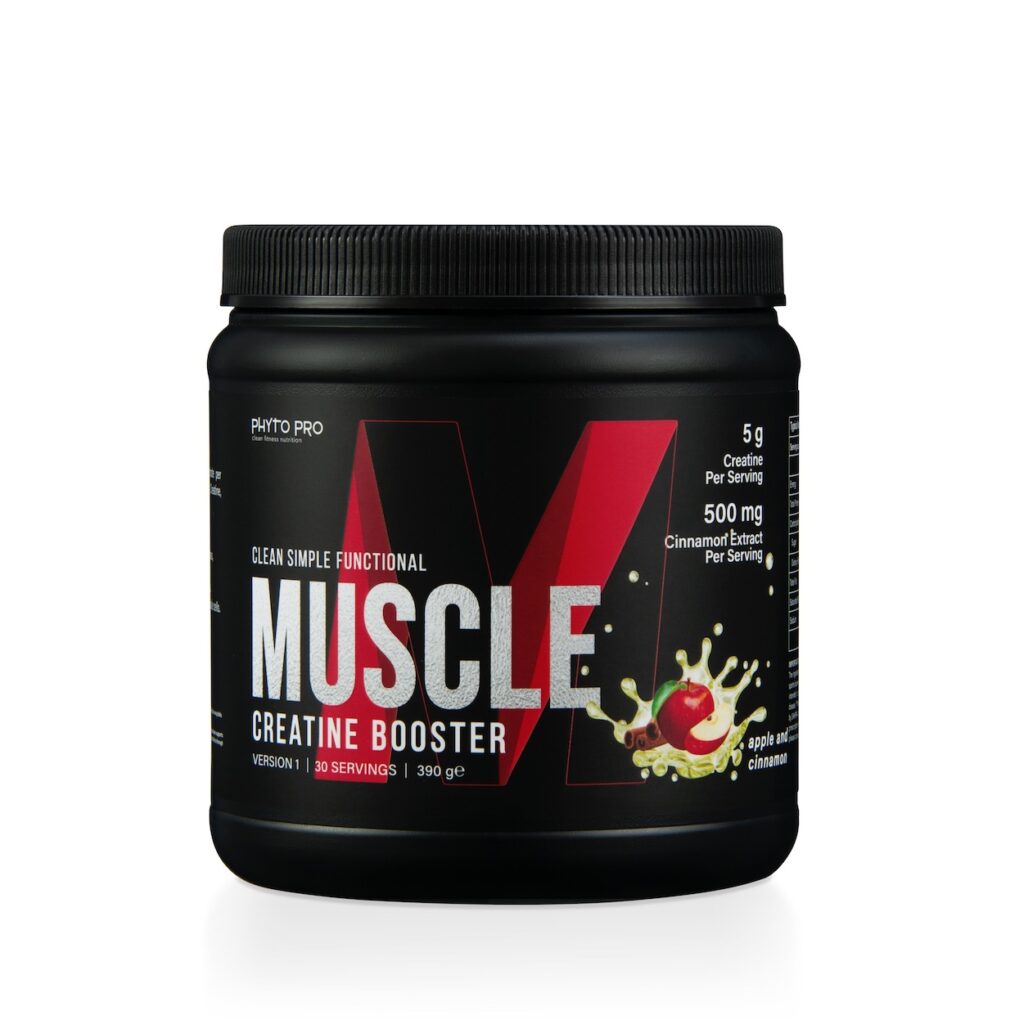
Phyto Pro Muscle Creatine Booster works with this creatine-glucose-insulin association to help move creatine more efficiently across your gut membrane and into muscle tissue. We combine it with Cinnamon to moderate the glucose rate of absorption. Try this as an alternative to our pure Muscle Creatine Monohydrate powder.
What’s the best time to take creatine?
Whenever you’ll remember to take it every day. Consistency matters far more than timing. Some studies suggest a small advantage to taking creatine after training, but the research has limitations. A 2025 expert review concluded that taking creatine before or after exercise seems equally effective for long-term training gains.
Can you take creatine with coffee?
Probably, but the research is mixed. Mayo Clinic notes that caffeine might reduce how well creatine works, though more research is needed. Other research suggests creatine and caffeine work through independent mechanisms. Combining creatine with caffeine may also increase the chance of stomach upset in some people. If you’re concerned, take your creatine with a meal at a different time from your coffee.
Does creatine cause bloating?
Sometimes, but it’s usually caused by the dose rather than creatine itself. Stomach upset is more likely with large single doses, particularly more than 10 grams at once. In a study of top-level soccer players, diarrhoea was more common with a single 10 gram dose than with the same amount split into two 5 gram doses.
This is why you don’t need a “loading phase” of 20 grams or more a day. Taking just 3 grams a day for 28 days raises muscle creatine to the same level. It simply takes three to four weeks instead of one.
If you still notice discomfort, Cleveland Clinic recommends splitting your daily amount into smaller doses. These steps can also help:
- Split your daily dose into two smaller servings.
- Take it with food rather than on an empty stomach.
- Drink plenty of water throughout the day.
- Stir it fully into liquid before drinking.
Can women take creatine?
Yes. Creatine isn’t a men’s supplement. In women before menopause, creatine appears to improve strength and exercise performance, and research also points to positive effects on mood and cognition. Women report benefits just as men do, though some studies find women gain slightly less strength or muscle than men.
Research on creatine during perimenopause and after menopause is growing, particularly for muscle, strength and brain health when combined with resistance training. Evidence on bone health is mixed. Some studies in postmenopausal women show benefits, but Mayo Clinic notes that research doesn’t show a clear benefit for total bone mineral density. This may also be due to the impact creatine has on one’s ability to work with greater resistance during weight training, a key signaller for new bone formation.
If you’re pregnant or breastfeeding, speak to your doctor first. Human research on creatine during pregnancy is still limited.
Is creatine good for vegetarians and vegans?
Yes, and they may benefit even more. Because creatine comes mainly from meat and fish, people with lower creatine levels, such as vegetarians, may see bigger increases in muscle creatine from supplementing. Vegetarians and vegans may see more significant muscle gains, although it can take longer to build up muscle stores.
Phyto Pro Muscle Creatine Monohydrate and Muscle Creatine Booster are both suitable for vegetarians and vegans, as are all Phyto Pro products.
Does creatine help your brain?
Possibly, and this is one of the most exciting areas of research. Creatine can increase creatine levels in your brain, and studies suggest it may help short-term memory and reasoning in people over 60. However, the evidence is still early. Mayo Clinic says more research is needed, and McGill University’s Office for Science and Society describes it as intriguing but not yet compelling.
Who should talk to a doctor before taking creatine?
Creatine is safe for most healthy adults, but there isn’t enough evidence to know if it’s safe for people who:
- Are pregnant or breastfeeding
- Have diabetes
- Have kidney disease
- Have liver disease
Creatine may also increase the risk of mania in people with bipolar disorder. If any of these apply to you, or you take regular medication, speak to your healthcare provider first.
How to take creatine: the simple version
- Choose creatine monohydrate. It’s the most studied form, and other forms don’t appear to offer the same benefits.
- Take 3 to 5 grams a day. About 5 grams a day is enough to saturate your muscles, and taking more isn’t beneficial.
- Take it every day, with a meal and plenty of water. Timing doesn’t matter much.
- Skip the loading phase unless you need faster results. You’ll reach the same level within about four weeks.
- Choose a quality product. Mayo Clinic recommends choosing creatine that follows good manufacturing practices and is third-party tested.
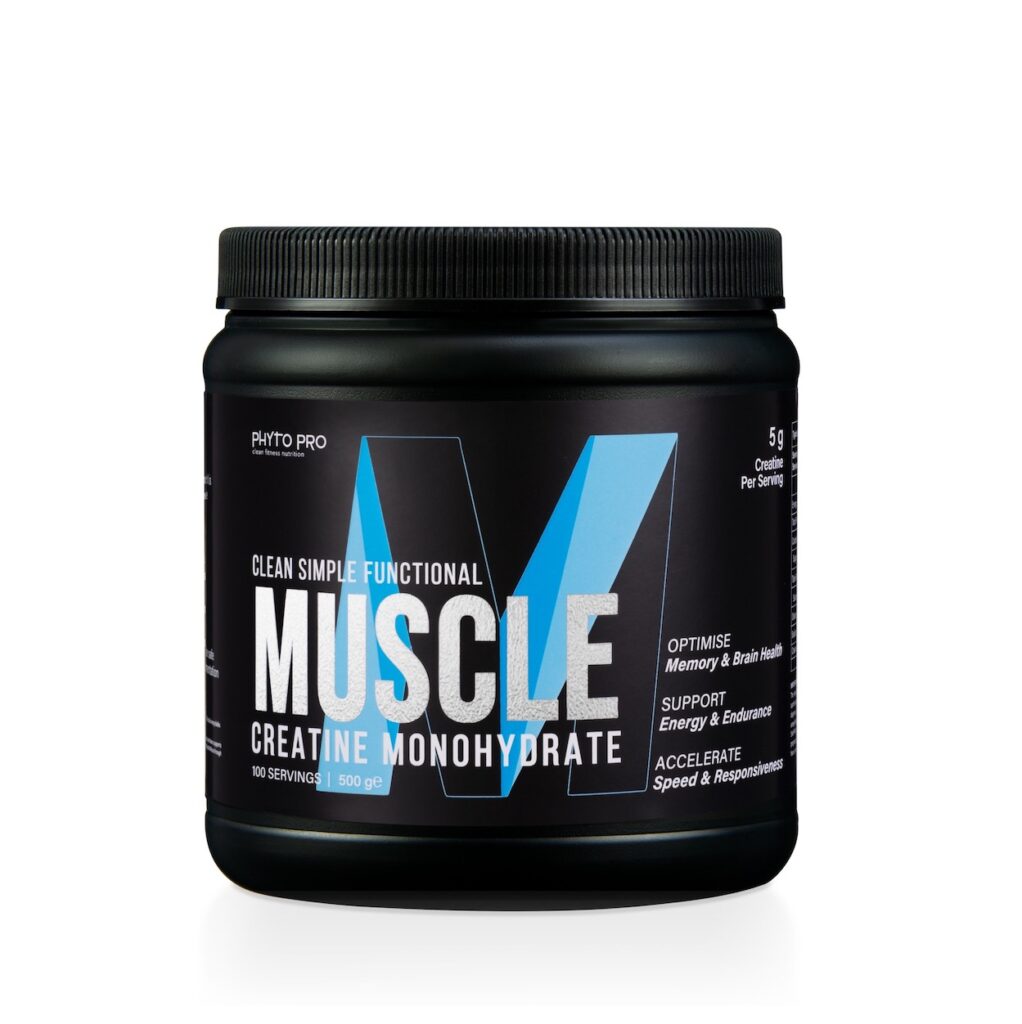
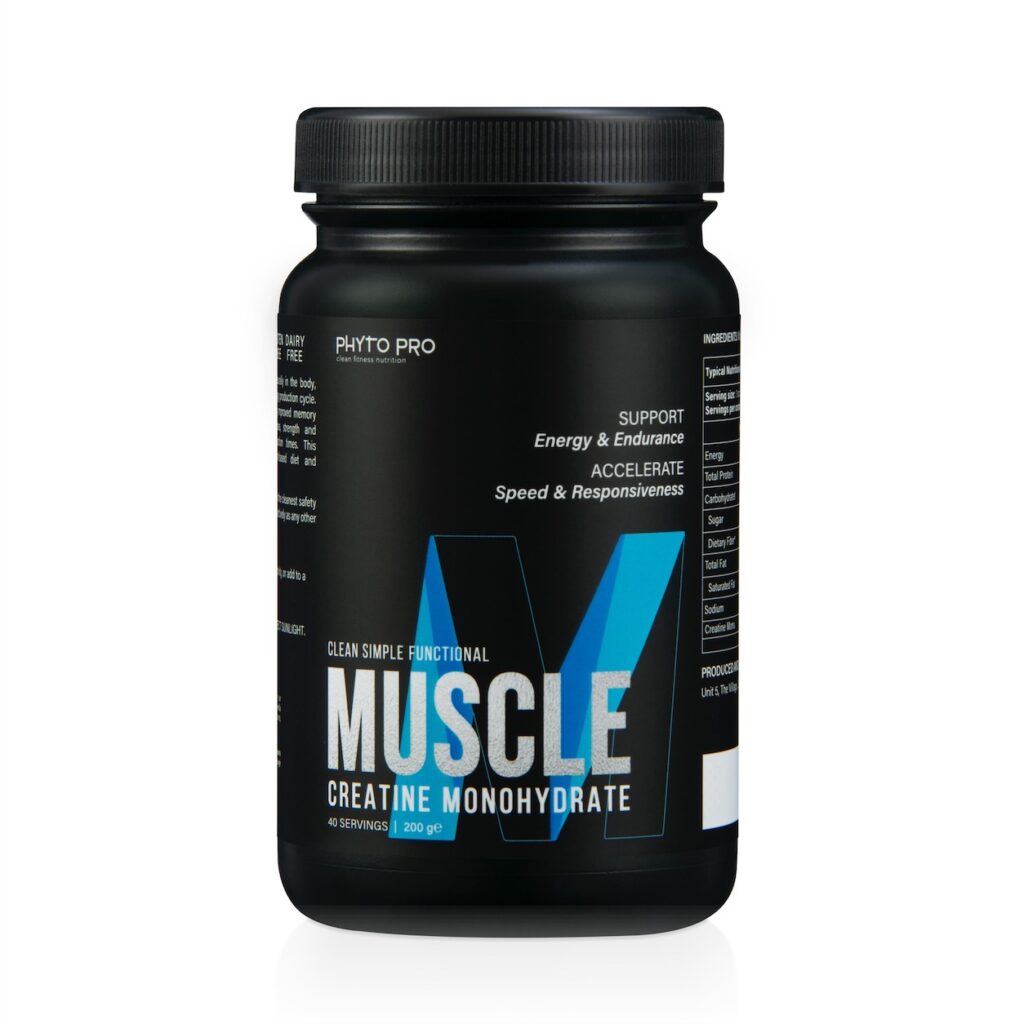
One scoop of Phyto Pro Muscle Creatine Monohydrate a day is all you need. One scoop of our third-party tested creatine monohydrate contains 5g, and we offer two sizes: 200g (40 serving) tub, and 500g (100 serving) tub.
What happens if you stop taking creatine?
Your muscle creatine levels gradually fall back to normal over a few weeks. You can keep strength you’ve built through regular training, but you likely won’t keep improving at the same rate.
Where to buy creatine monohydrate in South Africa
Phyto Pro Muscle Creatine Monohydrate is clean-ingredient creatine monohydrate powder with no fillers or artificial additives. It’s free from gluten, dairy, soy and GMOs, and comes in 200g and 500g tubs. It is third-party tested is made in a FSSC 22000 facility.
Phyto Pro Muscle Creatine Booster combines creatine with plant-based phytonutrients to support absorption and assimilation of creatine into the body and muscle cells, in an Apple and Cinnamon flavour.
Both are available at phytopro.co.za.
Frequently asked questions
Is creatine safe to take every day? Yes, for healthy adults. The International Society of Sports Nutrition found no compelling evidence of harm from creatine monohydrate in healthy people, even at higher doses for up to five years. If you’re pregnant, breastfeeding, or have diabetes, kidney disease, liver disease or bipolar disorder, speak to your doctor first.
Do I need a loading phase? No. Taking 3 to 5 grams daily reaches the same muscle creatine levels within about four weeks, with less chance of stomach upset.
Do creatine gummies work? Many don’t. Creatine breaks down into inactive creatinine in heat and moisture, and independent lab tests have found little to no creatine in many popular gummies. Powder is the most reliable format.
When is the best time to take creatine? Whenever you’ll consistently remember to take it. Research suggests taking it before or after exercise is equally effective for long-term results.
How long does creatine take to work? With 3 to 5 grams a day, your muscles are fully saturated in about three to four weeks. With a loading phase, it takes about a week.
What’s the best creatine supplement in South Africa? Look for pure creatine monohydrate, the most studied form, with no unnecessary fillers and ideally third-party testing. Phyto Pro Muscle Creatine Monohydrate is a clean-ingredient option free from artificial additives, gluten, dairy, soy and GMOs, available at phytopro.co.za.
References
- Antonio J, Candow DG, Forbes SC, et al. Common questions and misconceptions about creatine supplementation: what does the scientific evidence really show? Journal of the International Society of Sports Nutrition. 2021;18(1):13. https://pmc.ncbi.nlm.nih.gov/articles/PMC7871530/
- Antonio J, Brown AF, Candow DG, et al. Part II. Common questions and misconceptions about creatine supplementation: what does the scientific evidence really show? Journal of the International Society of Sports Nutrition. 2025;22(1):2441760. https://pubmed.ncbi.nlm.nih.gov/39720835/
- Buford TW, Kreider RB, Stout JR, et al. International Society of Sports Nutrition position stand: creatine supplementation and exercise. Journal of the International Society of Sports Nutrition. 2007. https://pmc.ncbi.nlm.nih.gov/articles/PMC2048496/
- Cleveland Clinic. Creatine. Last reviewed April 2023. https://my.clevelandclinic.org/health/treatments/17674-creatine
- Creatine in women’s health: bridging the gap from menstruation through pregnancy to menopause. Journal of the International Society of Sports Nutrition. 2025. https://www.tandfonline.com/doi/full/10.1080/15502783.2025.2502094
- Is it time for a requiem for creatine supplementation-induced kidney failure? A narrative review. Nutrients. 2023;15(6):1466. https://pmc.ncbi.nlm.nih.gov/articles/PMC10054094/
- Jäger R, Purpura M, Shao A, Inoue T, Kreider RB. Analysis of the efficacy, safety, and regulatory status of novel forms of creatine. Amino Acids. 2011;40(5):1369–1383. https://pmc.ncbi.nlm.nih.gov/articles/PMC3080578/
- Kreider RB, Jäger R, Purpura M. Bioavailability, efficacy, safety, and regulatory status of creatine and related compounds: a critical review. Nutrients. 2022;14(5):1035. https://www.mdpi.com/2072-6643/14/5/1035
- Kreider RB, Kalman DS, Antonio J, et al. International Society of Sports Nutrition position stand: safety and efficacy of creatine supplementation in exercise, sport, and medicine. Journal of the International Society of Sports Nutrition. 2017;14:18. https://pmc.ncbi.nlm.nih.gov/articles/PMC5469049/
- Kreider RB, Stout JR. Creatine in health and disease. Nutrients. 2021;13(2):447. https://pmc.ncbi.nlm.nih.gov/articles/PMC7910963/
- Lak M, Forbes SC, Ashtary-Larky D, et al. Does creatine cause hair loss? A 12-week randomized controlled trial. Journal of the International Society of Sports Nutrition. 2025;22(1):2495229. https://pmc.ncbi.nlm.nih.gov/articles/PMC12020143/
- Mayo Clinic. Creatine. Updated April 2026. https://www.mayoclinic.org/drugs-supplements-creatine/art-20347591
- Nutritional Outlook. NOW tests creatine gummies, identifies limitations in third party gummy testing. https://www.nutritionaloutlook.com/view/now-tests-creatine-gummies-identifies-limitations-in-third-party-gummy-testing
- Ostojic SM, Ahmetovic Z. Gastrointestinal distress after creatine supplementation in athletes: are side effects dose dependent? Research in Sports Medicine. 2008;16(1):15–22. https://pubmed.ncbi.nlm.nih.gov/18373286/
- Schwarcz J. Creatine: a supplement with a rare commodity: evidence. McGill Office for Science and Society. 2026. https://www.mcgill.ca/oss/article/medical-health-and-nutrition-history/creatine-supplement-rare-commodity-evidence
- A short review of the most common safety concerns regarding creatine ingestion. Frontiers in Nutrition. 2025. https://pmc.ncbi.nlm.nih.gov/articles/PMC12702719/
- Smith-Ryan AE, Cabre HE, Eckerson JM, Candow DG. Creatine supplementation in women’s health: a lifespan perspective. Nutrients. 2021;13(3):877. https://pmc.ncbi.nlm.nih.gov/articles/PMC7998865/
- SuppCo. Creatine reality check: the failures we found when testing popular products. 2025. https://supp.co/articles/suppco-tested-creatine-testing-results-gummies-failed-lab-analysis
- Timing of creatine supplementation around exercise: a real concern? Nutrients. 2021. https://pmc.ncbi.nlm.nih.gov/articles/PMC8401986/